
Drawing the Map Before the Journey
In the last post, I cleared the lot and staged the equipment for a new build. That felt good. Momentum was building. The temptation was to start pouring concrete immediately, throw up some walls, wire in some lights, figure out the floor plan later.
I didn't do that. Instead, I unrolled a blank sheet of paper and started drawing a blueprint.
The Renovation Trap
There's a well-known pitfall with rebuilds. You tear down the old place, learn from its flaws, and start building "the right way." Except the new design keeps growing. You add rooms the old place never had. You redesign spaces that were working fine. Months later, the building is still half-finished, and DK (the researcher who needs this tool every day) is standing outside in the rain.
I'd seen this happen on other projects. A renovation that was supposed to take weeks stretching into months because nobody drew the blueprints first. I didn't want that for Manuscript Alert. DK needs the tool to keep working while I rebuild around him.
So before picking up a single tool, I mapped out every room in the new building.
The Cleared Lot
After the teardown, here's what was staged and ready:
A working kitchen with no organization. Everything the backend did lived in one long counter, 688 items deep. Paper searches, settings, configuration, backups, all laid out end to end. It worked, but finding anything meant walking the entire line.
A shell of a dining room. The frontend existed but was mostly empty. Walls and a roof, no tables or chairs. More of a placeholder than a finished space.
All the ingredients stored in boxes on the floor. Research settings in one box, backup snapshots in another, search configurations in a third. Fine when you're cooking for one, impossible when you need to serve a team or work from a different location.
And no safety inspections. No way to know if a renovation step broke something until DK sat down and tried to order.
Seven Steps, One Rule
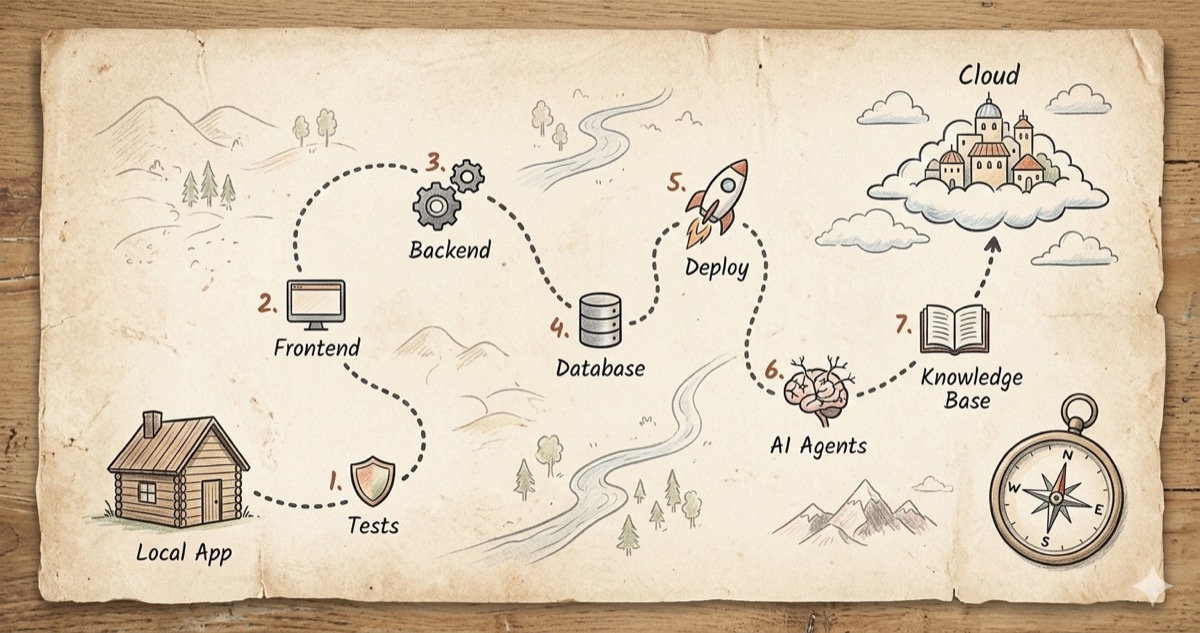
The blueprint fits on a single page. Seven steps, each building on the last, each leaving the app usable while the next one gets built.
Step 1: Tests and CI. Before changing anything structural, write automated checks for every workflow DK relies on. You don't start renovating without knowing which walls are load-bearing.
Step 2: Frontend redesign. Give researchers what they'll actually notice: a new interface with search controls, paper results, and statistics visible at once. Mobile-friendly from the start. This is where the renovation becomes real for DK.
Step 3: Backend restructure. Reorganize the backend so each piece handles one job. Add real-time streaming so researchers can watch a search happen instead of staring at a blank screen.
Step 4: Database. Move from local files to a real database that can be searched, shared, and accessed from anywhere. Not just the one laptop where everything happens to live.
Step 5: Cloud deployment. Put the app on the internet. Accessible from any device, anywhere. Push a change, and the live version updates automatically.
Step 6: AI agents. Instead of researchers manually specifying every keyword, build a team of specialized assistants that understand research context, fetch from multiple sources at once, and present a curated selection.
Step 7: Knowledge base. The final piece. Upload your own collection of papers. The system remembers what you've read and finds new work that connects to your existing research. Personalized discovery instead of starting every search from scratch.
Why This Order
The sequence isn't random. Each phase protects the next.
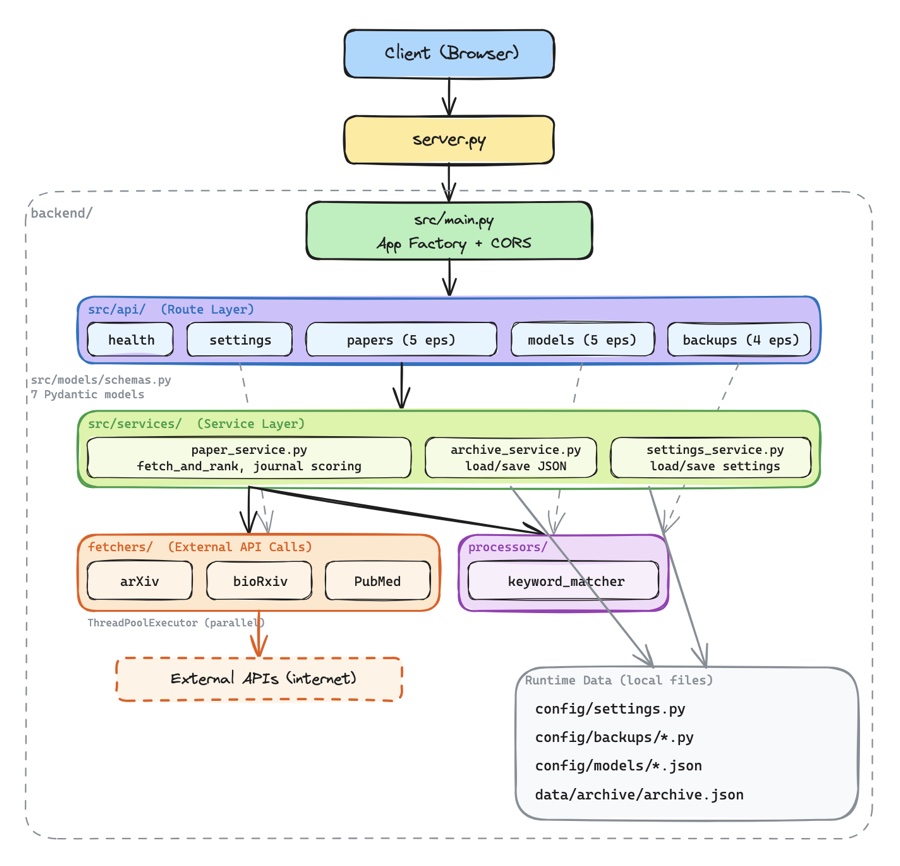
Safety inspections come first because everything after involves knocking down walls and rerouting plumbing. Without inspections, you don't know when you've broken something. The dining room comes before the kitchen reorganization because it gives DK an immediate improvement while I work behind the scenes.
Cold storage comes after the kitchen is reorganized because it's much easier to rewire clean, separated stations than one long tangled counter. Delivery comes after storage because there's no point opening for takeout if all the ingredients are in boxes on one floor. And the smart assistants come last because they need a fully operational kitchen with real-time communication already in place.
At every phase, the restaurant stays open. DK can search for papers, adjust his settings, browse results. I'm renovating while the lunch rush is happening.
What 88 Lines Bought Us
The whole blueprint is 88 lines. It took an afternoon to draft. But it gave me something worth more than any amount of construction: a clear picture of where every room goes and in what order to build them.
Every future decision can point back to this document. Should I add this feature now? Check the blueprint. Which phase does it belong to? Is the foundation for it poured? If not, I know what to build first.
The next post covers the first real construction work: giving the kitchen its own dedicated space in the building. Less glamorous than the smart sous-chef, but you can't install fancy equipment in a room that doesn't exist yet.